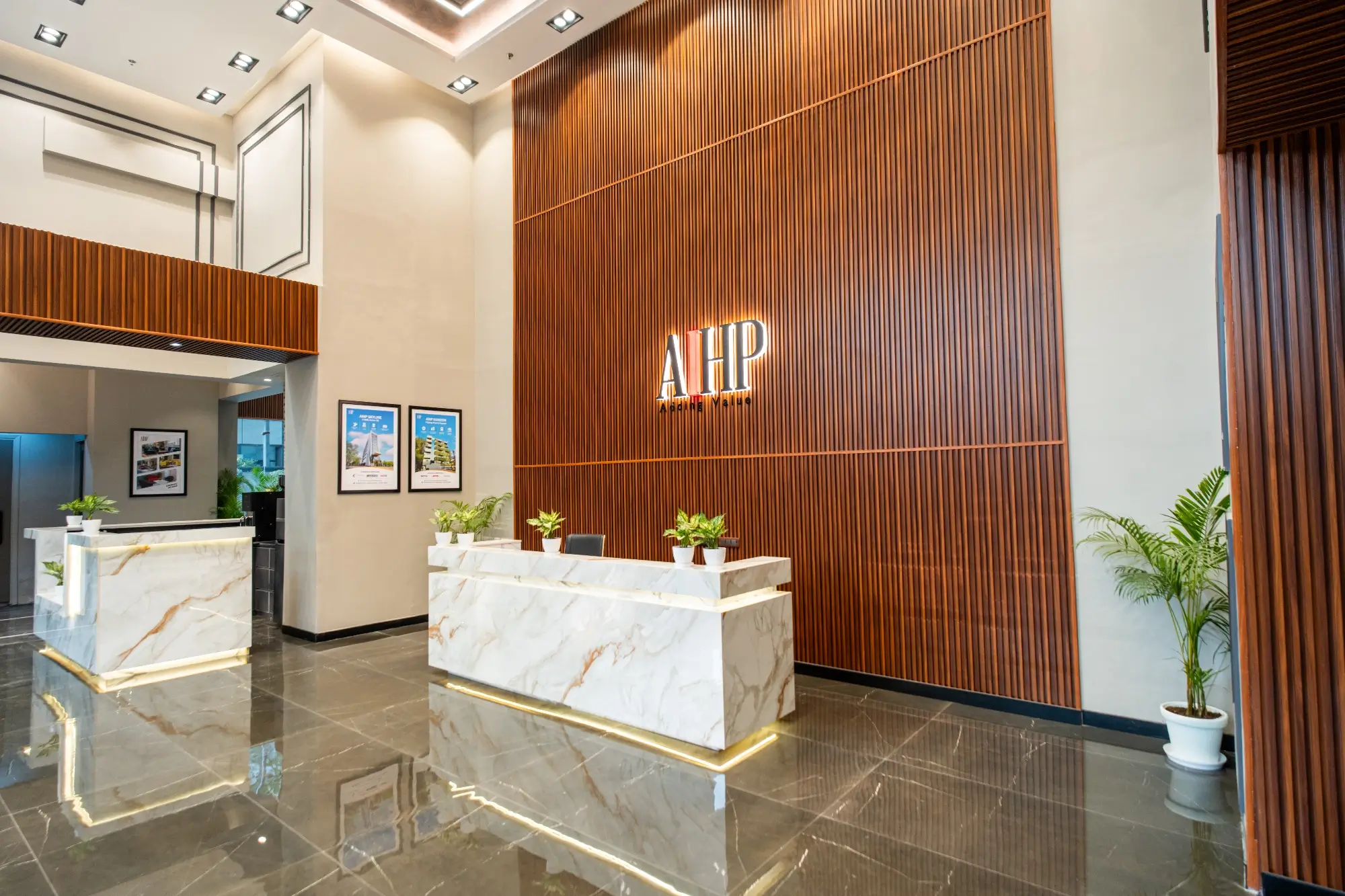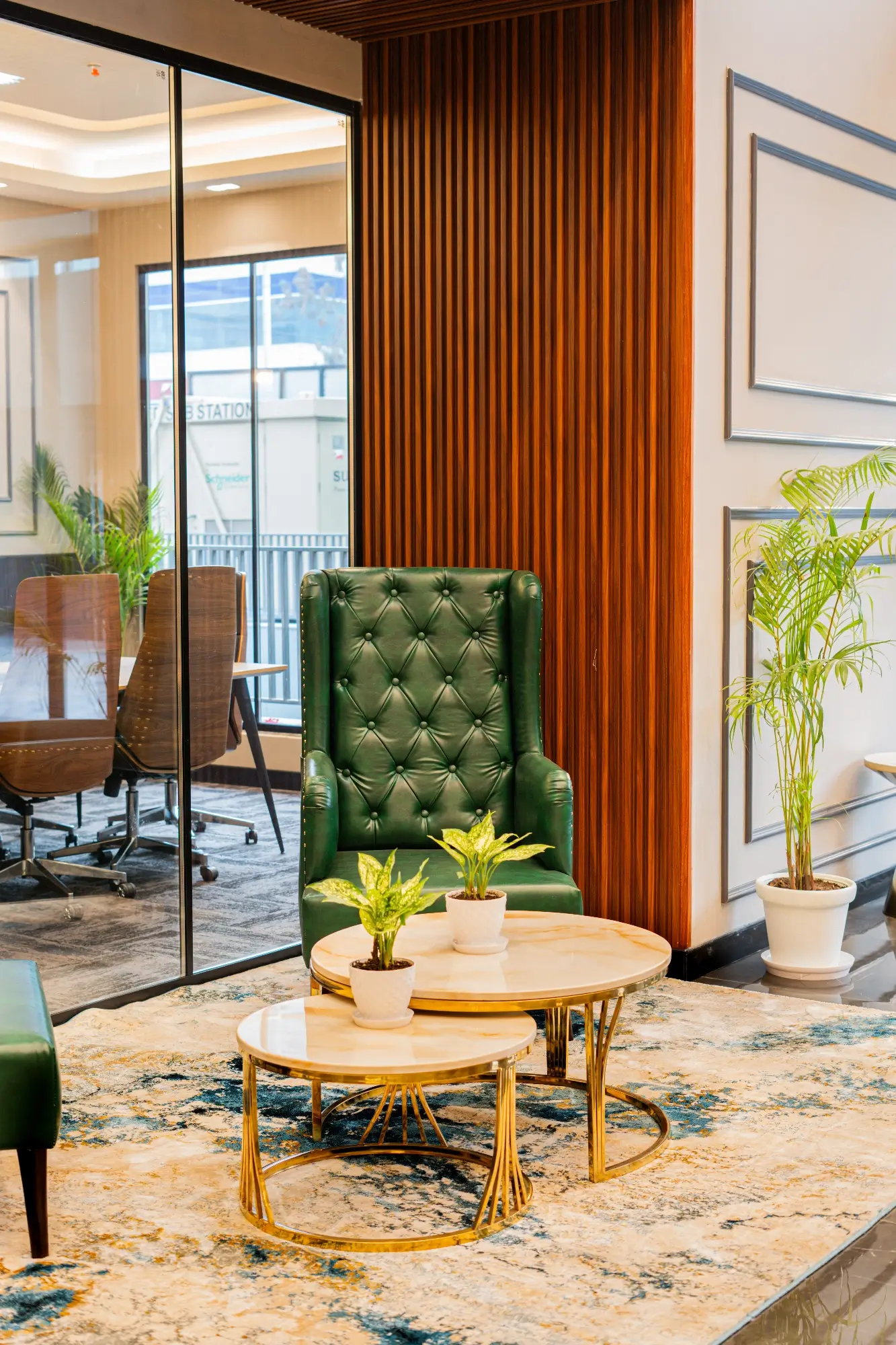
Small offices had a big glow-up in 2025. Teams wanted speed, lower CapEx, and better day-to-day comfort without renting extra square feet. The wins came from smarter planning, not fancy frills. If you’re setting up a compact floor this year, you can kick off with a quick scope discussion through our office interior design services and get a test-fit that respects both headcount and work modes.
What changed in 2025 (and why it helped small offices)
Hybrid settled into a pattern—busy mid-week, lighter Fridays—and leaders got serious about comfort, acoustics, and quick reconfiguration. A lot of briefs quietly borrowed ideas from the WELL Building Standard because it focuses on light, sound, air, and movement instead of only “looks.” At the same time, Indian tenants picked healthy-interior cues from IGBC Green Interiors to keep energy use and fatigue low in smaller footprints.
12 design ideas that punched above their weight
1) Small-room heavy planning
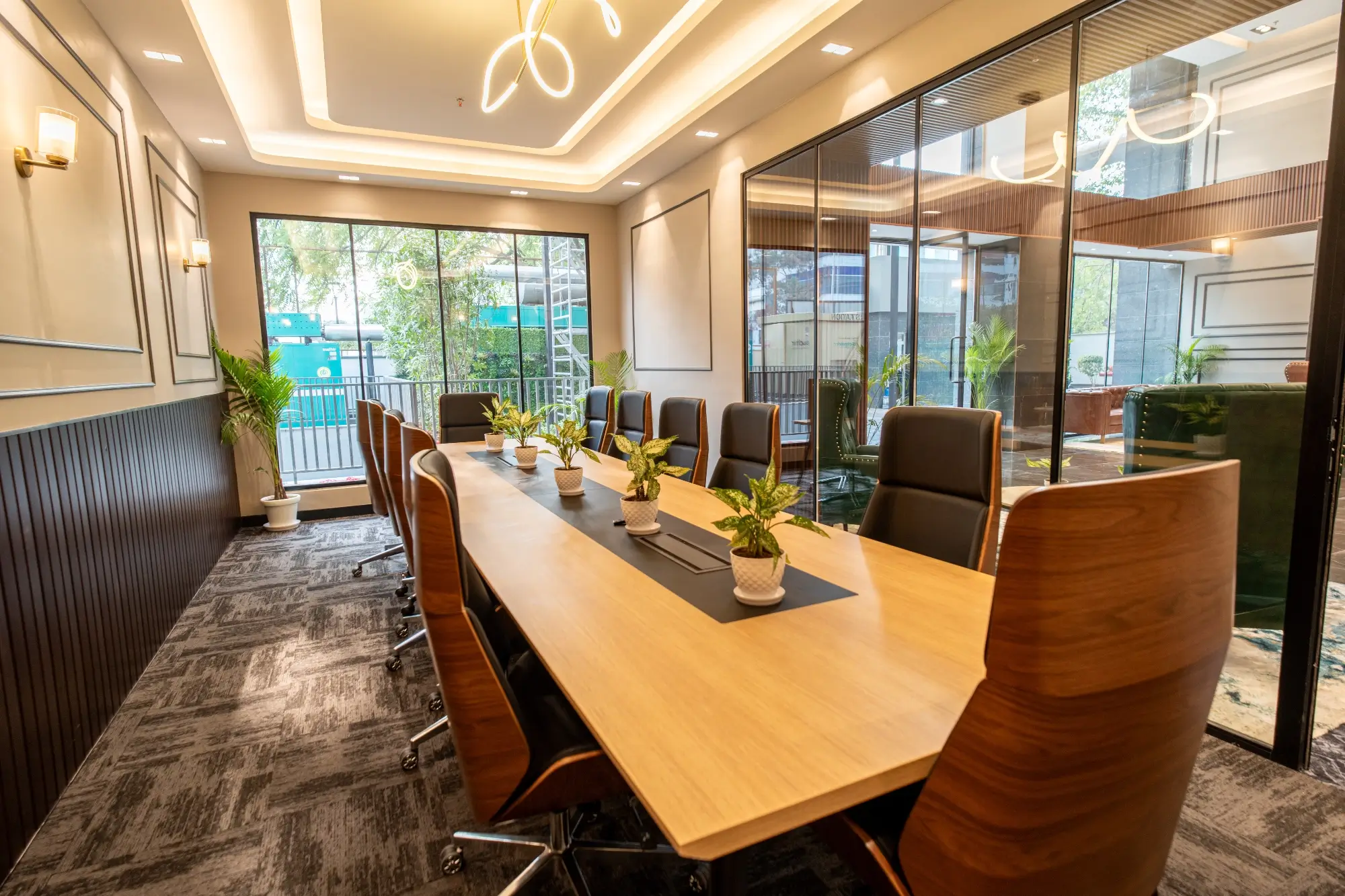
Compact floors worked best when the meeting mix leaned toward tiny rooms. Instead of one showpiece boardroom, add more phone booths and several 2–4 seat rooms. Daily friction drops, and the big room is free when you truly need it.
Try this: For ~60 seats, target 4 booths, three 2–4 seaters, one 6–8, and a single 10–12.
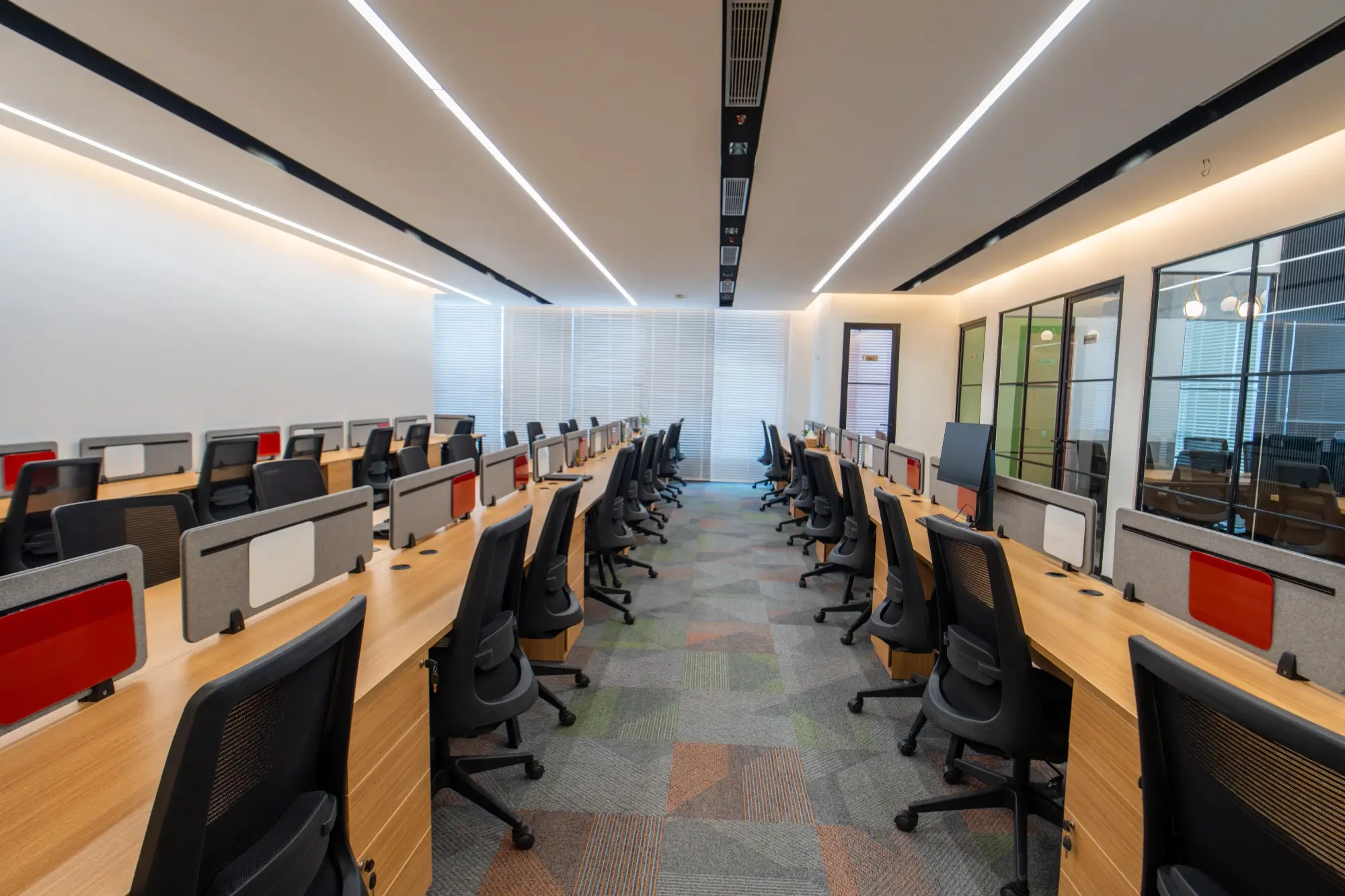
2) Team neighbourhoods with a 0.8 seat ratio
You don’t need one desk per person in hybrid. The sweet spot many teams used was ~0.8 seats per employee, but grouped into clear neighbourhoods so people still find their tribe on peak days.
Tip: Lockers make this work; without them, chairs become bag stands.
3) Phone booths where noise starts
Booths fail when they sit far from the action. Line them along the “call spine” near sales, support, or reception so usage goes up and the open floor stays calmer.
Placement rule: If a booth is a 20-second walk, people will use it. Longer than that, they won’t.
4) A real “library zone”
Create a no-call, softer-finish bay for deep work. Clear etiquette, carpet or acoustic baffles, and steady neutral light are enough to lift focus.
Policy: “Headphones on = do not disturb.” Simple and effective.
5) Café that moonlights as townhall
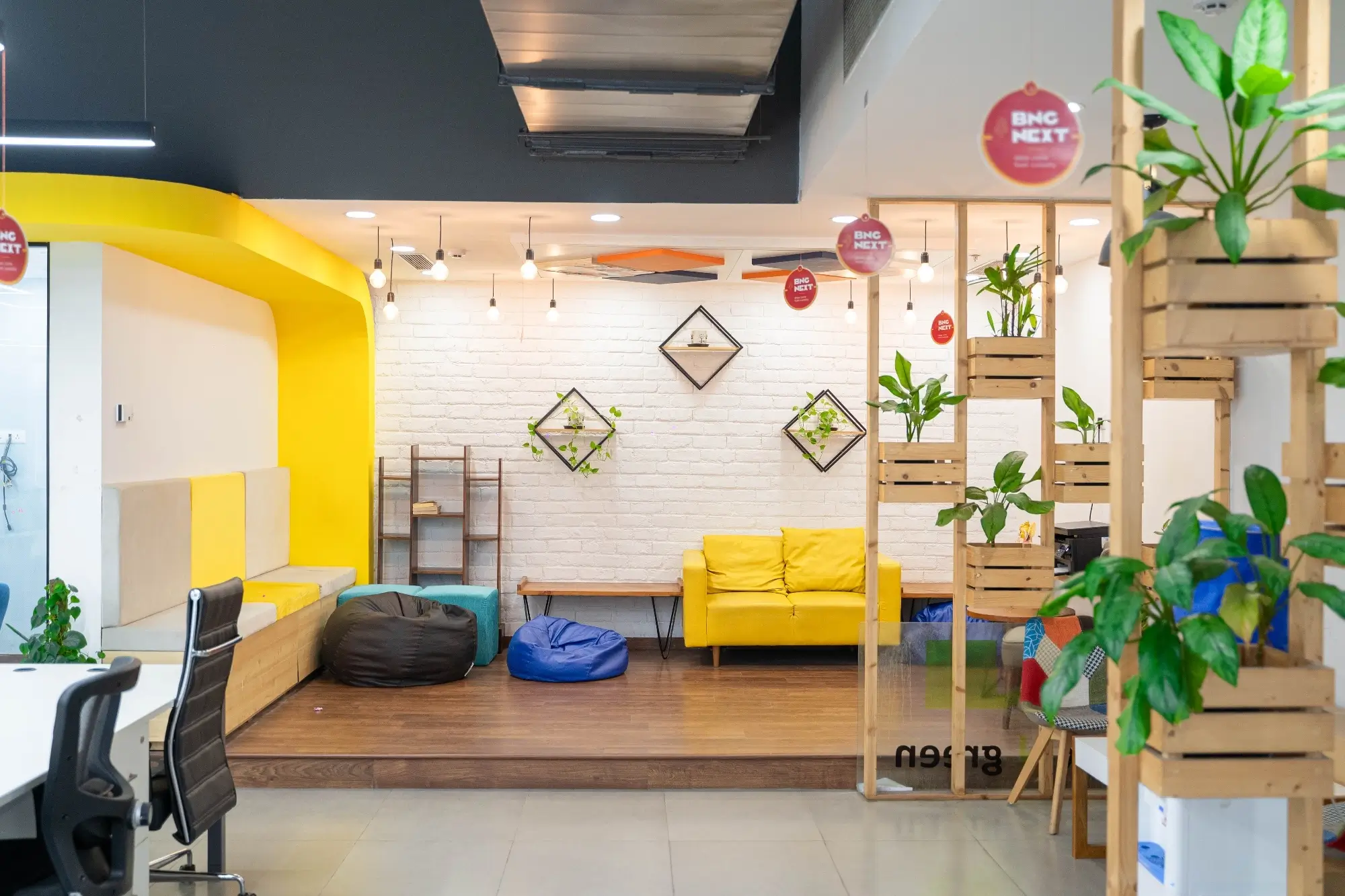
Skip a formal auditorium. Make the café multi-use with movable furniture and a mobile screen. Day to day it’s lunch and casual work; on Fridays it hosts a 40–60 person huddle.
Detail: Put floor boxes under long tables so laptops don’t die mid-meeting.
6) Mobile writing walls and foldable tables
Rooms work harder when whiteboards roll where needed and tables fold to clear space. This keeps the plan flexible without tearing anything down.
Good habit: Park two mobile boards in a corridor; impromptu huddles stop invading meeting rooms.
7) Daylight-first layouts
Desks with consistent daylight outperformed dramatic feature walls. Light finishes, glass in the right places, and shorter storage near windows helped the whole floor feel larger; many teams cross-checked choices against IGBC Green Interiors principles for comfort and efficiency.
8) Layered lighting that respects screens
Reduce eye strain by pairing neutral ambient light with task lights at worktops and warmer accents in lounges. This echoes the comfort logic behind the WELL Building Standard—not just “enough lux,” but the right light in the right place.
Screen reality: Avoid glossy surfaces behind monitors; glare kills focus in two hours flat.
9) Acoustic basics, done properly
Don’t treat panels like décor. Set performance targets: door seals on small rooms, NRC panels over chatty zones, soft seats near the “noise spine.” Once the space sounds calmer, people stop hoarding big rooms for quick calls.
Quick win: Put absorption on the ceiling over the loudest aisle—no loss of usable area.
10) Power and data where work actually happens
Design power and Wi-Fi around behaviour, not only walls. Floor boxes at collaboration tables, labelled grommets on worktops, and planned access points save five “Where’s the charger?” interruptions every day.
Ops tip: Keep spare adapters in one fixed drawer; don’t let them roam.
11) Vertical storage and invisible clutter control
Tall storage walls, under-bench drawers, and a courier landing near reception keep circulation clean. When everything has a home, aisles don’t become parking.
Rule: Parcels stop at the landing, not in emergency exits—ever.
12) Durable furniture with real standards behind it
Chairs and desks took daily punishment this year. Teams that checked the BIFMA standards overview for safety and durability bought fewer replacements later. In a small office, even one wobbly chair breaks the vibe.
Budget logic: If money is tight, reduce desk count slightly, not chair quality.
How to start this week (without drama)
Open a shared sheet and log two weeks of attendance by team. Once the pattern is visible, ask your designer for three test-fits at 0.7, 0.8, and 0.9 seat ratios. While layouts are in progress, align stakeholders with a plain-English checklist like 10 Elements of a Well-Designed Office Building so nobody forgets storage, circulation, or basic comfort. When you want to see how these ideas translate in built spaces, a quick browse of our gallery will help you pick a direction before you Contact us for a floor-specific plan.