
Three months into their office renovation, a Gurgaon technology firm still hadn’t moved in. The original 90-day timeline had stretched to 150 days. Monsoon delays, approval bottlenecks, and furniture delivery slippages compounded into expensive chaos. They were paying rent on two locations whilst their team worked from cafes.
That timeline disaster isn’t unusual in Delhi NCR’s office renovation landscape. Most companies underestimate how long transformations actually take, budget inadequately for delays, and struggle with coordination across vendors, landlords, and authorities.
Orange Offices provides office interior design services in Delhi NCR, and we’ve managed enough renovation projects to recognise the pattern: companies who understand the actual timeline phases—and their Delhi NCR-specific complications—finish faster and cheaper than those who don’t.
So let’s break down what really happens during an office renovation, how long each phase genuinely takes, and which factors specific to Gurgaon and Delhi NCR markets will impact your schedule.
Phase 1: Pre-Renovation Planning (2-4 Weeks)
Before anyone picks up a hammer, you need clarity. This planning phase determines whether your renovation stays on schedule or spirals into extended chaos.
Needs assessment and scope definition (1-2 weeks): What are you actually renovating? Complete overhaul or targeted refresh? This matters because your scope determines timeline dramatically. A 5,000-square-foot space getting new paint, flooring, and furniture finishes in 90 days. That same space receiving structural modifications, new MEP systems, and full fit-out takes 4-5 months.
Survey your team. What workspace pain points need fixing? Do you require more meeting rooms, better acoustics, updated technology infrastructure? Document these requirements clearly—vague instructions during execution phase cause expensive mid-project changes that derail timelines.
Budget establishment and vendor selection (1-2 weeks): Set realistic budgets that include contingency. Research shows adding 10-15% buffer for unexpected expenses prevents mid-project funding crises that halt work.
For vendor selection in Delhi NCR, verify credentials thoroughly. Check completed projects, speak with references, and confirm their familiarity with local building regulations and approval processes. A designer unfamiliar with Gurgaon’s Municipal Corporation requirements will burn weeks learning procedures you’re paying for.
Landlord coordination (ongoing): If you’re leasing, involve your landlord immediately. Most commercial leases in Gurgaon require landlord approval for structural changes, MEP modifications, and significant alterations. Getting this approval before starting design work prevents discovering mid-project that your planned changes violate lease terms.
Phase 2: Design Development and Approvals (3-6 Weeks)
This phase transforms your vision into executable plans whilst navigating Delhi NCR’s approval landscape.
Design iterations (2-3 weeks): Your designer creates layouts, selects materials, and develops detailed specifications. Expect 2-3 design rounds. The first presents concepts, the second refines based on feedback, and the third finalises construction-ready documents.
Don’t rush this phase. Decisions made here ripple through the entire timeline. Changing tile specifications mid-execution adds weeks waiting for new materials. Redesigning conference room layouts after framing begins means demolition and reconstruction.
Bespoke office interior design requires thorough upfront planning because custom elements—branded reception desks, specialty lighting, unique architectural features—have longer lead times than standard items.
Technical drawings and specifications (1 week): Your designer produces comprehensive construction documents: floor plans, reflected ceiling plans, electrical layouts, plumbing schematics, elevations, and detailed specifications. Contractors need these to bid accurately and execute properly.
Incomplete drawings cause delays when contractors discover mid-project that critical details weren’t specified. They halt work, wait for clarifications, and adjust timelines.
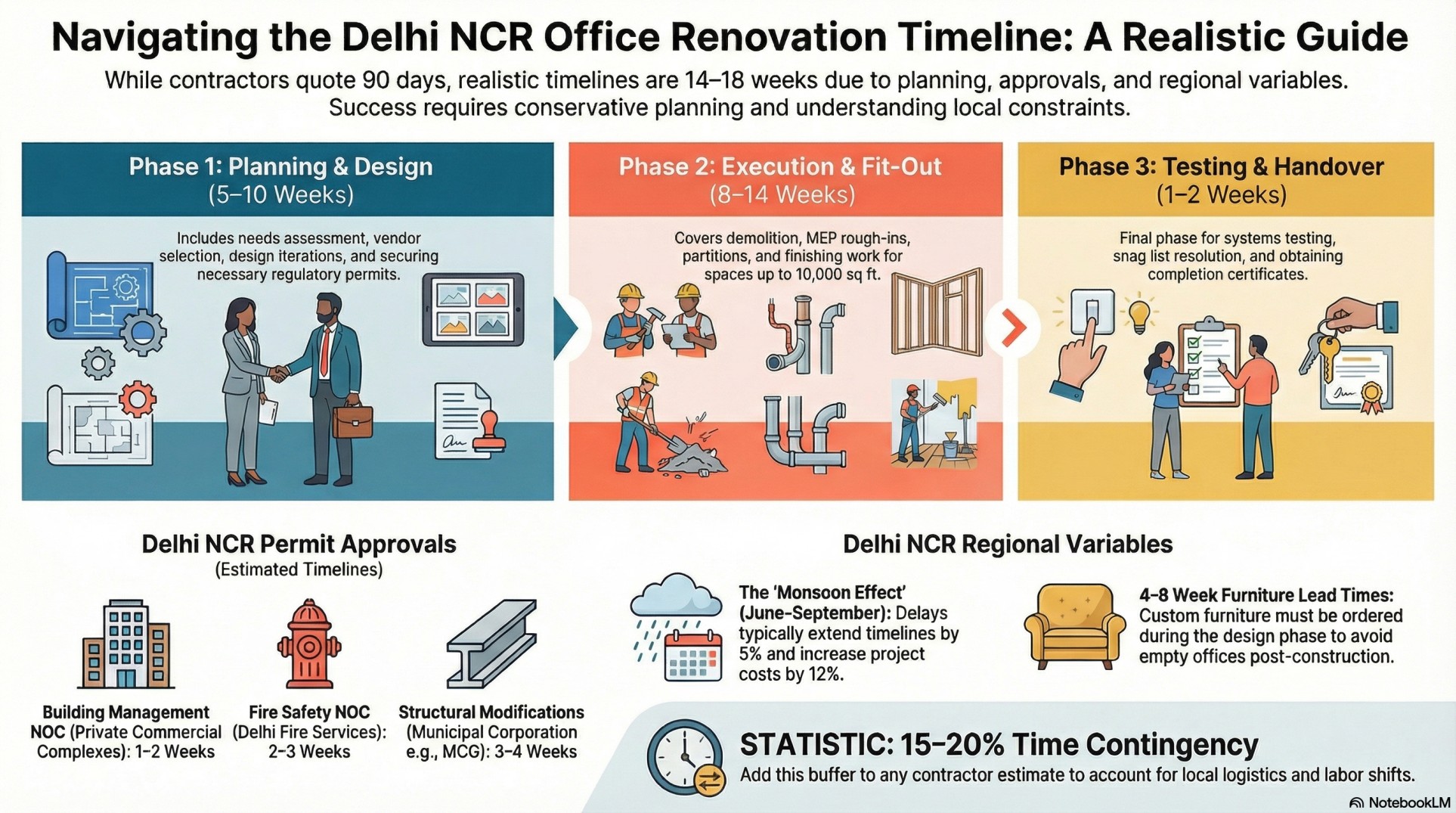
Permits and approvals (2-4 weeks): Delhi NCR’s approval requirements vary by location and scope. For commercial office renovations in Gurgaon’s established buildings, you typically need:
Building management NOC: Most commercial complexes in areas like Cyber City, Golf Course Road, and Udyog Vihar require internal approvals from building management. Timeline: 1-2 weeks if your plans comply with building regulations.
Fire safety NOC: Significant renovations affecting fire systems, egress paths, or occupancy loads require Delhi Fire Services approval under Delhi Fire Services Rules 2010. Timeline: 2-3 weeks for standard office renovations.
Structural modifications approval: Any changes affecting load-bearing elements need Municipal Corporation approval and structural engineer certification. Timeline: 3-4 weeks.
Minor renovations (cosmetic changes, furniture updates, basic electrical work) often proceed with just building management NOC. Major transformations (new walls, MEP system overhauls, structural changes) require full regulatory approval process.
Working with experienced designers familiar with Delhi NCR approval processes accelerates this phase significantly. They know which departments to approach, what documentation format authorities expect, and how to navigate inevitable bureaucratic delays.
Phase 3: Execution—Where Plans Meet Reality (8-14 Weeks)
Construction transforms approved designs into physical space. For standard 5,000-10,000 square foot office renovations, expect 8-12 weeks. Larger spaces or complex fit-outs extend to 14-16 weeks.
Demolition and site preparation (1-2 weeks): Removing existing partitions, flooring, false ceilings, and outdated fixtures. This phase generates massive debris requiring proper disposal. Gurgaon Municipal Corporation has specific waste disposal regulations—unauthorised dumping invites penalties and project stoppages.
Most commercial buildings in Gurgaon restrict noisy work to 9am-6pm on weekdays. Plan demolition schedules around these constraints.
MEP rough-ins (2-3 weeks): Installing mechanical, electrical, and plumbing infrastructure before finishing work begins. This includes HVAC ductwork, electrical conduits, data cabling, plumbing lines, and fire suppression systems.
MEP work often reveals surprises in older buildings—outdated wiring requiring complete replacement, inadequate power capacity needing transformer upgrades, plumbing that doesn’t match drawings. Each discovery adds days or weeks to timelines. This is why experienced contractors build contingency into MEP schedules.
Partitions and ceiling work (2-3 weeks): Erecting walls, installing door frames, and creating false ceilings. Modern office renovation increasingly uses glass partitions and modular systems that install faster than traditional gypsum walls but require precise measurements and custom fabrication.
Flooring, painting, and finishing (3-4 weeks): Installing tiles, carpets, or wooden flooring, followed by painting and trim work. Delhi NCR’s climate affects this phase significantly—high humidity during monsoon slows paint drying and can cause flooring adhesive failures. Many contractors schedule finishing work outside monsoon season when possible.
Furniture and fixtures installation (1-2 weeks): Custom furniture has 4-8 week lead times from order to delivery. Start this process during design phase, not execution phase. Otherwise your completed office sits empty for weeks waiting for workstations.
Ready-made modular furniture installs faster but requires accurate space measurements. A single measurement error means desks that don’t fit, creating expensive delays for returns and reorders.
Phase 4: Testing, Snag Resolution, and Handover (1-2 Weeks)
Construction completion isn’t move-in readiness. This final phase ensures everything actually works.
Systems testing (3-5 days): Verify electrical systems, HVAC performance, plumbing functionality, fire safety equipment, and data/communication infrastructure. Test under load conditions—running all lights, computers, and HVAC simultaneously reveals capacity issues that wouldn’t appear during individual tests.
Snag list creation and resolution (5-7 days): Walk through with your project manager identifying defects, incomplete work, and items requiring correction. Common snags: misaligned door frames, paint touch-ups needed, electrical outlets not functioning, flooring seams visible, lighting levels inadequate.
Contractors fix these items before final handover. Resist pressure to accept incomplete work with promises of later completion—contractors move to next projects and your “small fixes” never get done.
Final approvals and documentation (2-3 days): Obtain completion certificates from relevant authorities, collect MEP testing certificates, and receive warranty documentation for installed systems and equipment. These documents matter for insurance, future modifications, and regulatory compliance.
Delhi NCR-Specific Timeline Factors That Derail Projects
Monsoon impact (June-September): Research shows monsoon delays extend project timelines by approximately 5% and increase costs by 12%. Heavy rains halt exterior work, disrupt material deliveries, reduce labour availability, and slow concrete curing and paint drying.
For office renovations, monsoon primarily affects buildings without weather protection. If your renovation involves façade work, outdoor areas, or requires exterior material access, expect significant July-August delays. Interior-only renovations experience less impact but still face material delivery disruptions and labour absenteeism.
Smart contractors schedule weather-sensitive work outside monsoon season and maintain indoor backup tasks for rainy days. But extended monsoons or unusually heavy rainfall can defeat even good planning.
Vendor and labour availability: Delhi NCR’s construction market experiences seasonal capacity constraints. October-March sees peak activity as everyone rushes to complete projects before summer heat or monsoon rains. Material suppliers face stock-outs, skilled labour becomes scarce, and contractors juggle multiple simultaneous projects.
Securing reliable vendors during peak season requires advance booking—often 4-6 weeks ahead. Last-minute vendor searches compromise both timeline and quality as you settle for whoever’s available rather than best qualified.
Permit processing variations: Approval timelines vary dramatically across Delhi NCR jurisdictions. DDA-governed areas, Municipal Corporation of Delhi zones, Gurgaon Municipal Corporation, and NOIDA Authority each have different processes, documentation requirements, and processing speeds.
Gurgaon’s commercial areas generally process approvals faster than residential-turned-commercial zones where land use complications arise. Budget 2-4 weeks for straightforward approvals, 4-8 weeks for complex scenarios involving structural changes or mixed-use considerations.
Traffic and logistics: Material deliveries to central Gurgaon locations like Cyber City or Golf Course Road face severe traffic constraints during peak hours. Delivery vehicles often wait hours to access building loading bays. These delays compound when multiple trades need materials simultaneously.
Contractors familiar with Delhi NCR logistics schedule deliveries during off-peak windows and maintain adequate on-site storage to buffer against delivery disruptions.
How to Avoid Timeline Disasters
Start planning early—much earlier than feels necessary: Begin your renovation planning 3-4 months before your desired move-in date for standard projects, 6 months for complex transformations. This buffer accommodates design iterations, approval delays, and inevitable surprises.
Build realistic contingency into every phase: Add 15-20% time buffer beyond contractor estimates. If told “90 days,” plan for 105-110. This psychological cushion prevents panic when delays occur and allows rational decision-making rather than expensive rush solutions.
Make decisions quickly during execution: Contractor questions about tile choices, paint colours, or fixture specifications need fast answers. Every delayed decision ripples through the schedule. Establish clear decision-making authority and response timelines before work begins.
Conduct weekly site visits and progress reviews: Don’t wait for completion to discover problems. Weekly walkthroughs identify issues whilst they’re still easily correctable. Falling behind schedule becomes obvious when you’re tracking progress weekly rather than discovering it three weeks before planned move-in.
Choose experienced Delhi NCR contractors: Contractors familiar with local permit processes, seasonal challenges, reliable material suppliers, and building management requirements deliver faster than those learning on your project. Their Delhi NCR experience is worth premium pricing through time saved and headaches avoided.
Eco-friendly workspace design often requires specialised materials and vendors. Identify these requirements early and verify local availability. Discovering mid-project that your sustainable flooring has 6-week lead time from overseas suppliers creates schedule chaos.
Moving In: The Final Push
Timeline doesn’t end when construction completes. You still need to move in, and that requires coordination too.
Professional movers need 2-3 days for typical office relocation. IT infrastructure setup (servers, networking, phones) takes another 2-3 days. Staff need time to settle into new workstations, learn new systems, and adjust to the space.
Budget a full week between “construction complete” and “fully operational office.” Rushing this transition creates chaos—employees searching for supplies, technology glitches disrupting work, and workflow confusion reducing productivity.
Smart companies move over a weekend, allowing Monday for settling in and minor issue resolution before expecting normal productivity.
The Realistic Timeline Nobody Talks About
Here’s the uncomfortable truth about office renovation timelines in Delhi NCR: most projects take 20-30% longer than initial estimates. Not because contractors are incompetent, but because renovation involves hundreds of interconnected decisions, multiple vendors, weather variables, approval uncertainties, and inevitable surprises hidden behind walls.
The companies that finish on schedule aren’t the ones with unrealistically aggressive timelines. They’re the ones who plan conservatively, make decisions promptly, choose experienced partners, and accept that flexibility beats rigid adherence to impossible schedules.
Your 90-day renovation timeline should account for 3-4 weeks planning and approvals before work begins, 10-12 weeks for execution including contingency, and 1-2 weeks for final testing and move-in preparation. That’s 14-18 weeks total, not the 12 weeks your contractor initially quotes.
Understanding this reality prevents the expensive mistakes that derail projects—inadequate budgets because you’re paying double rent longer than planned, rushed decisions because you’re panicking about delays, and accepting substandard work because you’re desperate to move in.
Plan for the real timeline, not the optimistic one. Your renovation will finish when it finishes. Building buffer into expectations prevents stress and allows focus on getting quality results rather than fighting impossible deadlines.
Planning an office renovation in Delhi NCR? Get in touch with Orange Offices for realistic timeline planning and expert project management.