When a company owns its office, the thinking changes. It’s not “How do we fit 120 people in this floor and move in fast?” It becomes, “How do we build a space that still feels right after 7–10 years, even when teams, tech, and work styles change?”
A leased office is like renting a flat. You try to make it comfortable, but you also know you’ll leave someday. An owned office is different. It becomes an asset, a culture marker, and a daily experience that your people carry in their head. If you design it well, it turns into a legacy. If you design it in a hurry, it becomes an expensive regret that you keep patching every year.
If you’re planning an owner-occupied workspace and want a long-term plan (not just pretty renders), you can start with a structured brief through our office interior design services.
Why designing for an owned office is a different game
You’re not just building interiors, you’re building an asset
In leased spaces, shortcuts are tempting because the timeline is short and the lease term has an end. In owned offices, every shortcut comes back to you later as maintenance cost, rework, or “Why is this space aging so badly?”
Owned offices need:
- Better material durability and easier maintenance
- Cleaner MEP planning so upgrades don’t break the ceiling every time
- A layout that can evolve without demolition
- Comfort levels that support daily performance, not just a launch day photo
You’ll live with today’s decisions for years
A wrong seat density in a lease hurts for 2–3 years. In an owned building, it hurts for 10. Same for lighting, acoustics, HVAC zoning, storage, and circulation. So the design process has to be more thoughtful.
Step 1: Start with a 10-year vision, not today’s headcount
This sounds obvious, but most owners still plan like tenants. They freeze everything based on current headcount and current org chart.
Instead, start with 3 numbers:
- Today’s headcount
- 3-year target
- 10-year potential (even if it’s a range)
Now link it to work style:
- Will hybrid stay?
- Are more client visits expected?
- Will you need training rooms later?
- Are you moving towards more product/tech roles or more sales roles?
You don’t need perfect forecasting. You just need a “direction.” Once you have that, your layout and services can be designed to stretch.
Step 2: Masterplan the building like a campus, even if it’s one floor
Owner-occupied design should feel like a simple masterplan. Not complicated. Just clear.
Think in layers
- Public layer: reception, client zones, brand moments, meeting suites
- Team layer: work bays, collaboration points, project rooms
- Support layer: IT, storage, print, housekeeping, pantry back-end, utilities
- Future layer: expansion zones, flexible rooms, spare MEP capacity
A good trick is to mark “zones that can change” vs “zones that should not change.” Keep fixed services and shafts stable, and allow team areas to flex.
If you want a basic checklist to avoid missing fundamentals like circulation, storage, daylight, and planning logic, align your internal stakeholders once using 10 Elements of a Well-Designed Office Building. It makes everyone speak the same language early.
Step 3: Design the MEP like you’ll upgrade it later (because you will)
Owner-occupied offices always evolve. More screens, more meeting rooms, more AV, more fresh air needs, different teams.
So MEP (HVAC, electrical, data, fire) has to be designed for future upgrades.
HVAC: zoning is everything
Don’t keep one big zone for the full floor and call it done. Make zones like:
- Open office zone
- Meeting room zone
- Server/IT zone
- Reception and client zone
- Café zone
This helps in two ways:
- Comfort improves (meeting rooms stop becoming ovens).
- Future changes become easier (you can modify one zone without breaking everything).
If you want sustainability + comfort to be part of the design (without overcomplicating), borrowing a few practical ideas from IGBC Green Interiors helps a lot, especially around ventilation, energy, and material choices.
Electrical and data: plan for growth, not just “enough points”
Owner offices often underestimate plug load. In 3 years, every desk has more devices, and meeting rooms need better AV.
Do this early:
- Keep extra capacity in panels
- Use clean cable routing and access panels
- Put power where people actually work (collab tables, café touchpoints)
- Plan Wi-Fi access points properly, not as last-minute jugaad
Fire and safety: build it once, build it right
Because you own the space, approvals and compliance should be rock-solid. Design the escape routes, signage, and systems neatly from the start, so later expansions don’t create safety compromises.
Step 4: Build for flexibility without making the office feel temporary
Some people hear “flexible office” and imagine a cheap co-working vibe. That’s not what we want.
In owner-occupied offices, flexibility should feel premium and intentional.
Smart flexibility ideas that age well
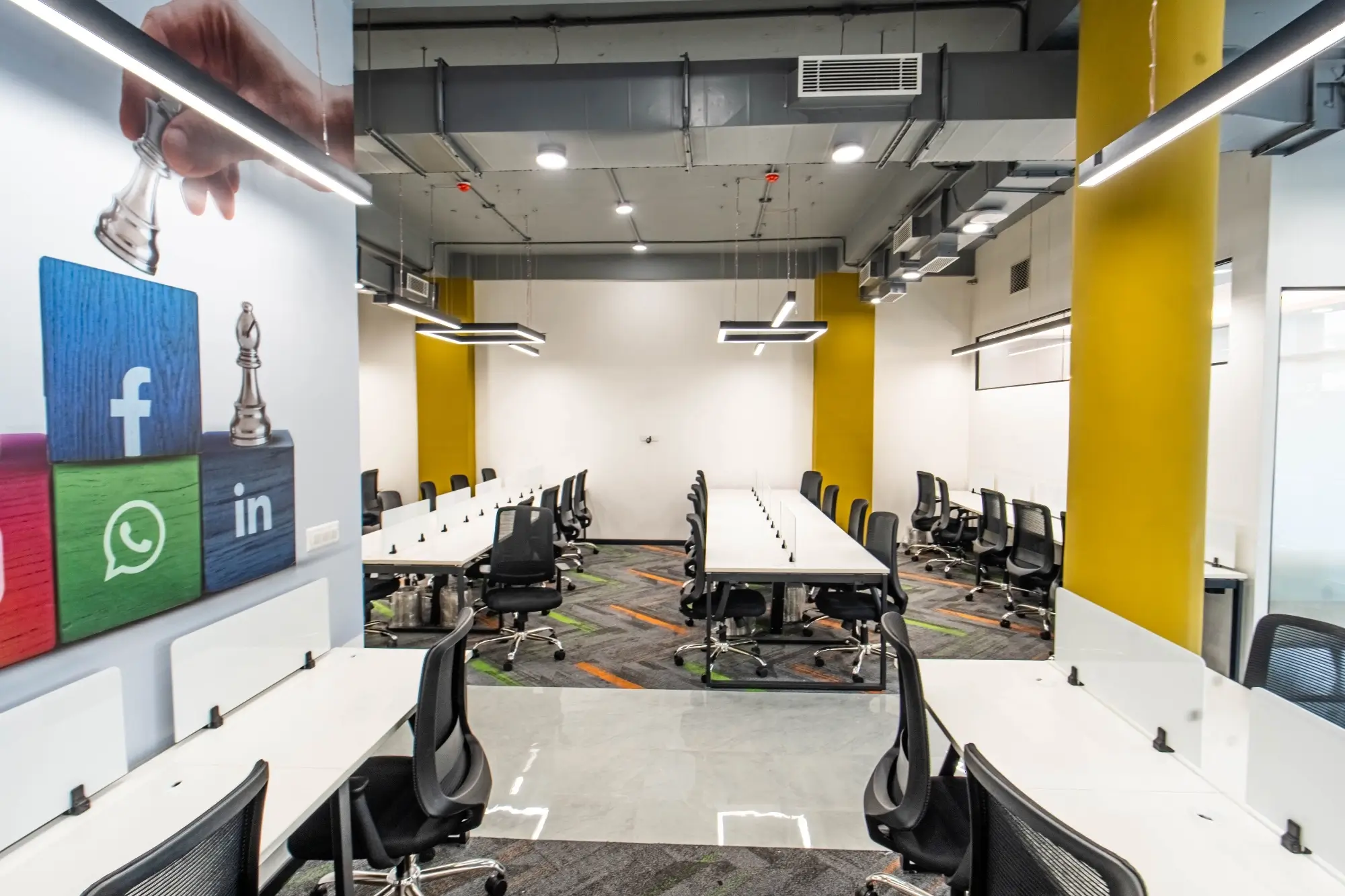
- Demountable partitions for parts of the floor that may change
- Project rooms that teams can “own” for 2–6 weeks
- A café that converts into townhall and training space with movable furniture
- Modular storage walls so you can add/shift without demolition
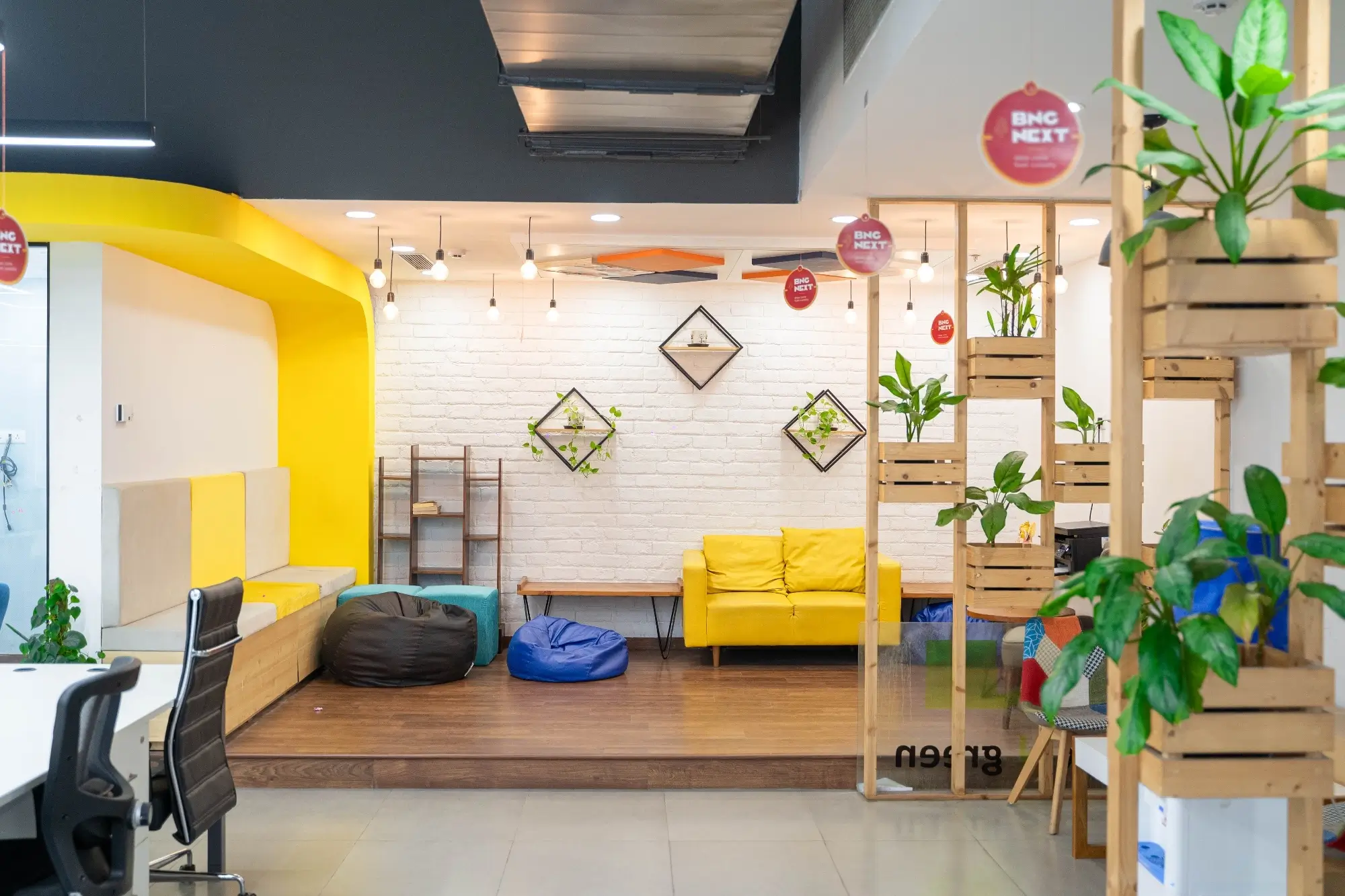
- A few “soft zones” (lounges / touch-down counters) that absorb peak days
The goal is simple: change should happen with minimal civil work.
Step 5: Comfort becomes your culture, not just your design
In an owned office, comfort is not a nice-to-have. It directly impacts retention, focus, and how people feel about the company.
The comfort trio is:
- Light
- Sound
- Air
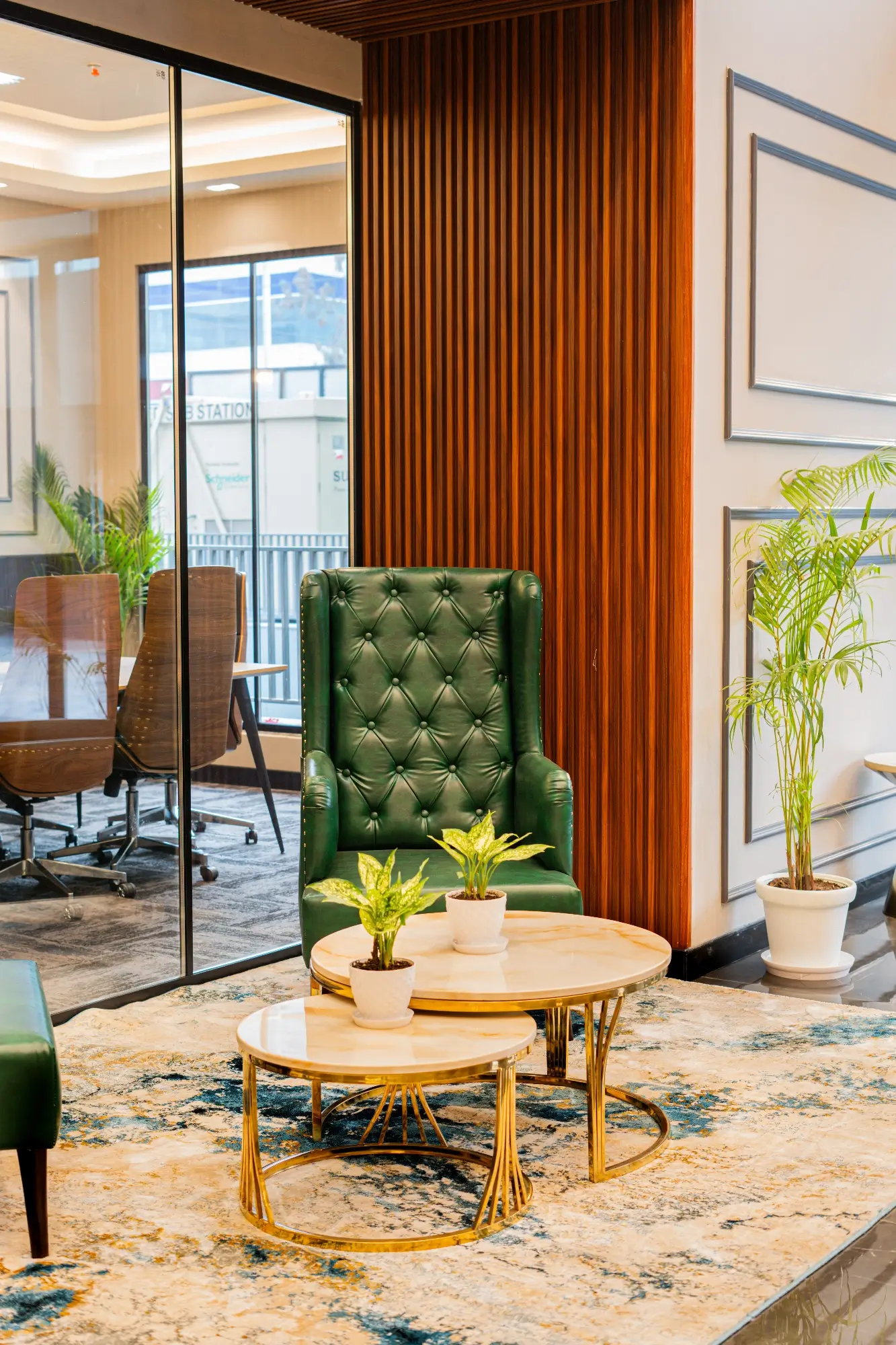
Design standards like the WELL Building Standard are useful here, not because you need certification, but because the thinking is correct: people perform better when the environment supports them properly.
Lighting that works in Indian conditions
- Neutral, glare-free lighting for work bays
- Warmer lighting in lounge/café zones
- Task lighting where people do long screen work
- Avoid shiny surfaces behind monitors (glare is real headache)
Acoustics that stop daily frustration
Owner offices often go heavy on glass because it looks premium. But too much glass without acoustic planning becomes a call-centre feel.
Balance glass with:
- Soft ceilings or acoustic panels in noisy areas
- Door seals for meeting rooms
- Phone booths placed near the “call spine”
Step 6: Choose materials like you’re choosing maintenance for 10 years
This is where owner-occupied offices win or lose.
A finish that looks amazing on day one but chips daily is not premium. It’s expensive pain.
Ask these questions before finalising finishes
- Can housekeeping clean it easily every day?
- Will it scratch, stain, or age badly with NCR dust?
- Can we replace a part without replacing the whole wall?
- Does it look good in evening lighting also, not only daylight?
Keep your palette limited and timeless. Then add 2–3 strong brand moments instead of doing “branding everywhere.”
Step 7: Furniture is not décor, it’s daily health
Because you own the office, furniture is a long-term investment. A bad chair hurts productivity and increases fatigue, simple.
Shortlist chairs and workstations that align to durability and safety benchmarks like the BIFMA standards overview. It saves you from bulk replacements and constant repairs.
If budget is tight, reduce seat count a little, but don’t compromise on chairs. This is one place where “cheap” becomes costly very fast.
Step 8: Make your brand feel permanent, not loud
Owner-occupied offices are a rare chance to build a space that truly reflects your story.
But branding doesn’t mean logos everywhere.
Better approach:
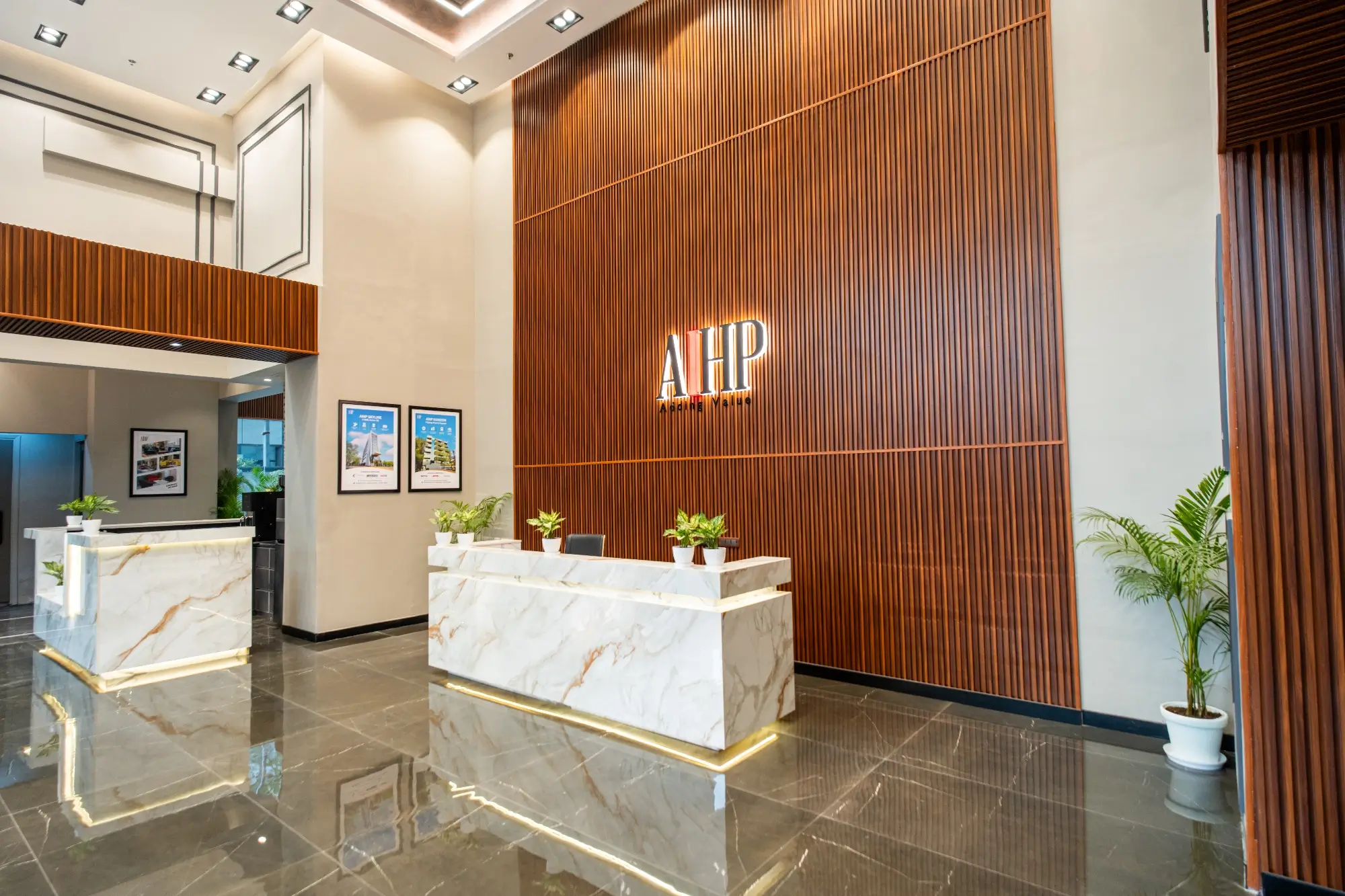
- A strong reception wall with identity
- A client meeting suite that feels polished
- A café / community zone that feels warm and human
- Subtle brand cues in material, colour accents, and graphics
If leadership is struggling to visualise options, it’s easier to align on mood using built references. A quick scroll through our workspace gallery helps founders and admin teams decide faster, because you’re reacting to real spaces, not only moodboards.
Step 9: Plan for operations like you plan for design
Owner offices often spend on design and forget daily operations. Then after 6 months, it starts feeling tired.
Plan for:
- Storage for IT, housekeeping, pantry supplies
- A courier landing area near reception
- Easy-to-service ceilings and access points
- Standardised AV kits so meeting rooms don’t waste time daily
- A simple rule set for tidy desk and booking etiquette
These small things decide whether the office feels “premium” after 2 years.
Step 10: Don’t keep the project “open ended” — lock decisions properly
Owner-occupied projects get delayed because people keep changing their mind. Since you own it, everyone wants perfection. That’s normal, but timelines suffer.
A practical way:
- Freeze layout first
- Freeze MEP next
- Freeze finishes after that
- Branding and décor can evolve later, don’t block the build for it
When you’re ready to turn this into a floor-specific roadmap with timelines and stages, you can just contact our team and we’ll help structure it properly.