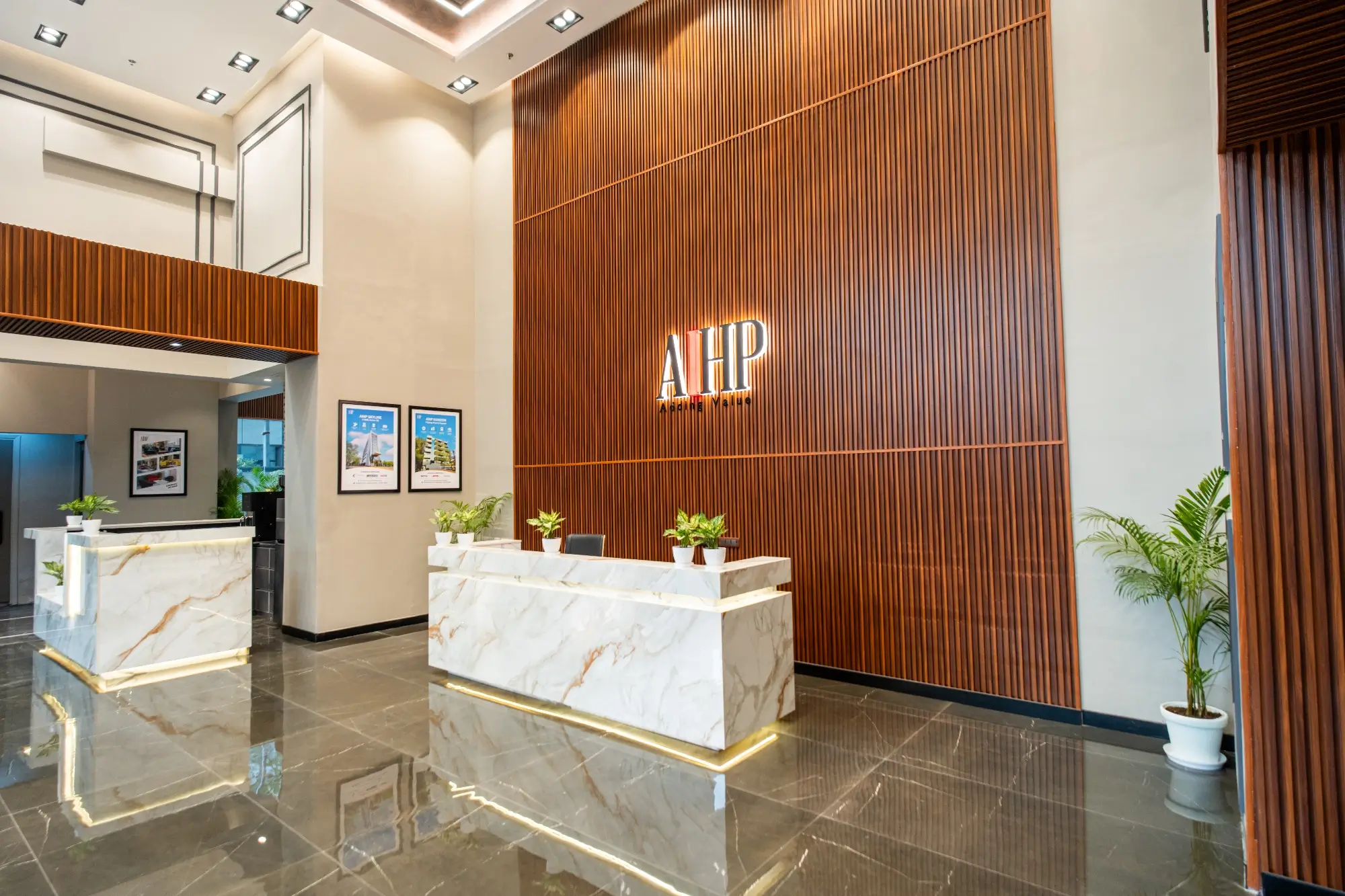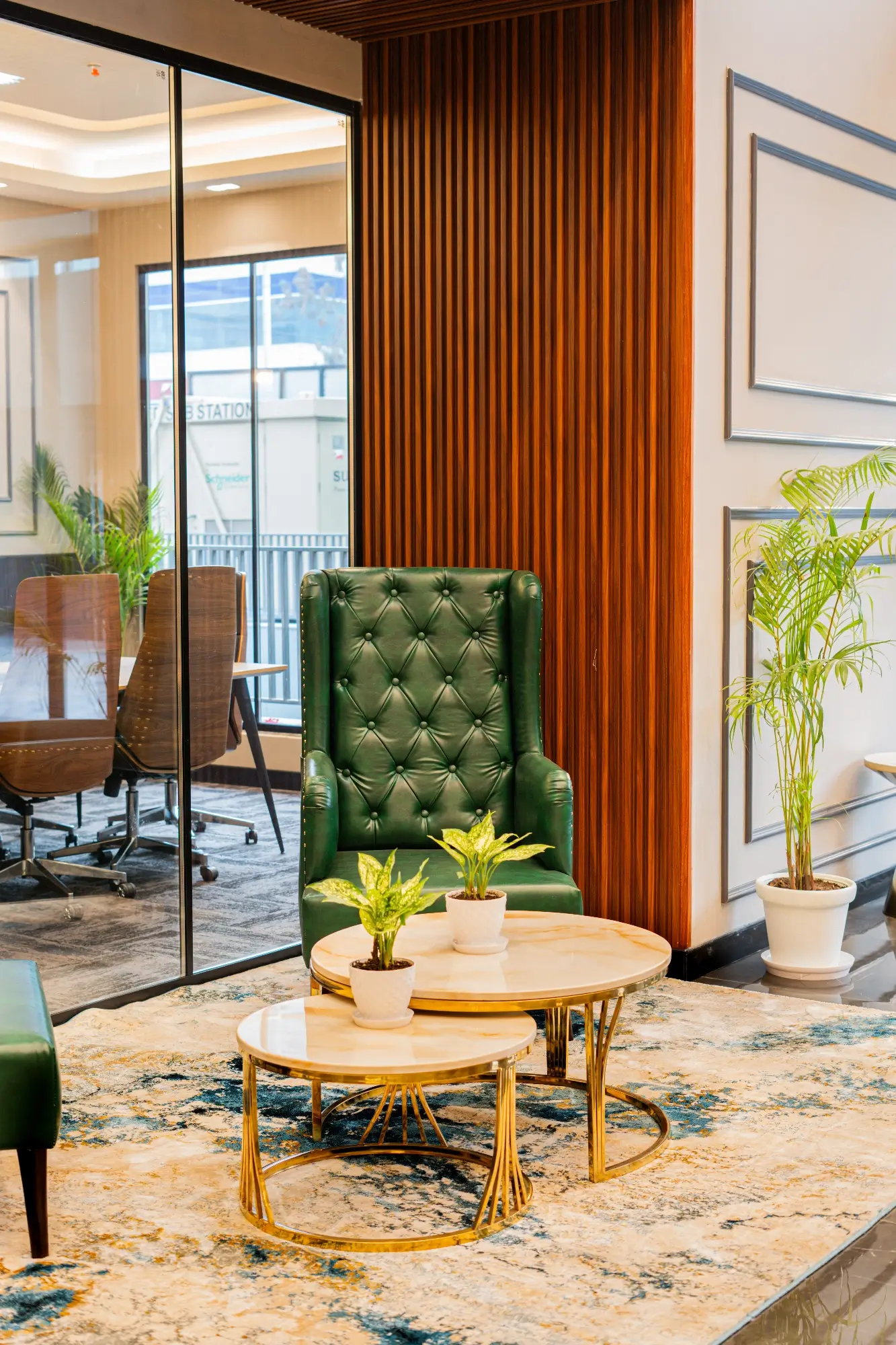
Hybrid is our new normal. Some people come two days, some three, few are daily. Looks messy on paper, but it’s very doable if you design for how your team actually shows up, not for a perfect world. This guide keeps language simple, adds small Indian-English slips, and gives you a plan you can start today. If you want help turning this into drawings and a site plan, you can talk to a turnkey team through our office interior design services.
Start with attendance, not headcount
Before layouts, do one small study. For 2–3 weeks, note daily attendance by team. Mark base days and peak days. You’ll see a pattern only:
- Base: the normal day, maybe 60–70% in seats
- Peak: the busy day, say 85–95%
- Design target: plan somewhere between base and peak, not at 100%
A simple Google Sheet is enough. Once you know your real pattern, you stop guessing and overspending.
Seat ratios that actually work
For hybrid, you don’t need one seat per person. A practical range in India is 0.7 to 0.9 seats per person. Go near 0.7 when teams hot-desk happily and days are staggered; go near 0.9 when culture is “my spot please” or work is compliance heavy.
Ratio alone won’t save you. Pair it with a small system: easy desk booking (same-day or D-1), team neighbourhoods so people find each other, lockers so bags don’t live on chairs, and a grace period for no-shows. On furniture quality, it helps to check the BIFMA standards overview so chairs and desks don’t fail in year two.
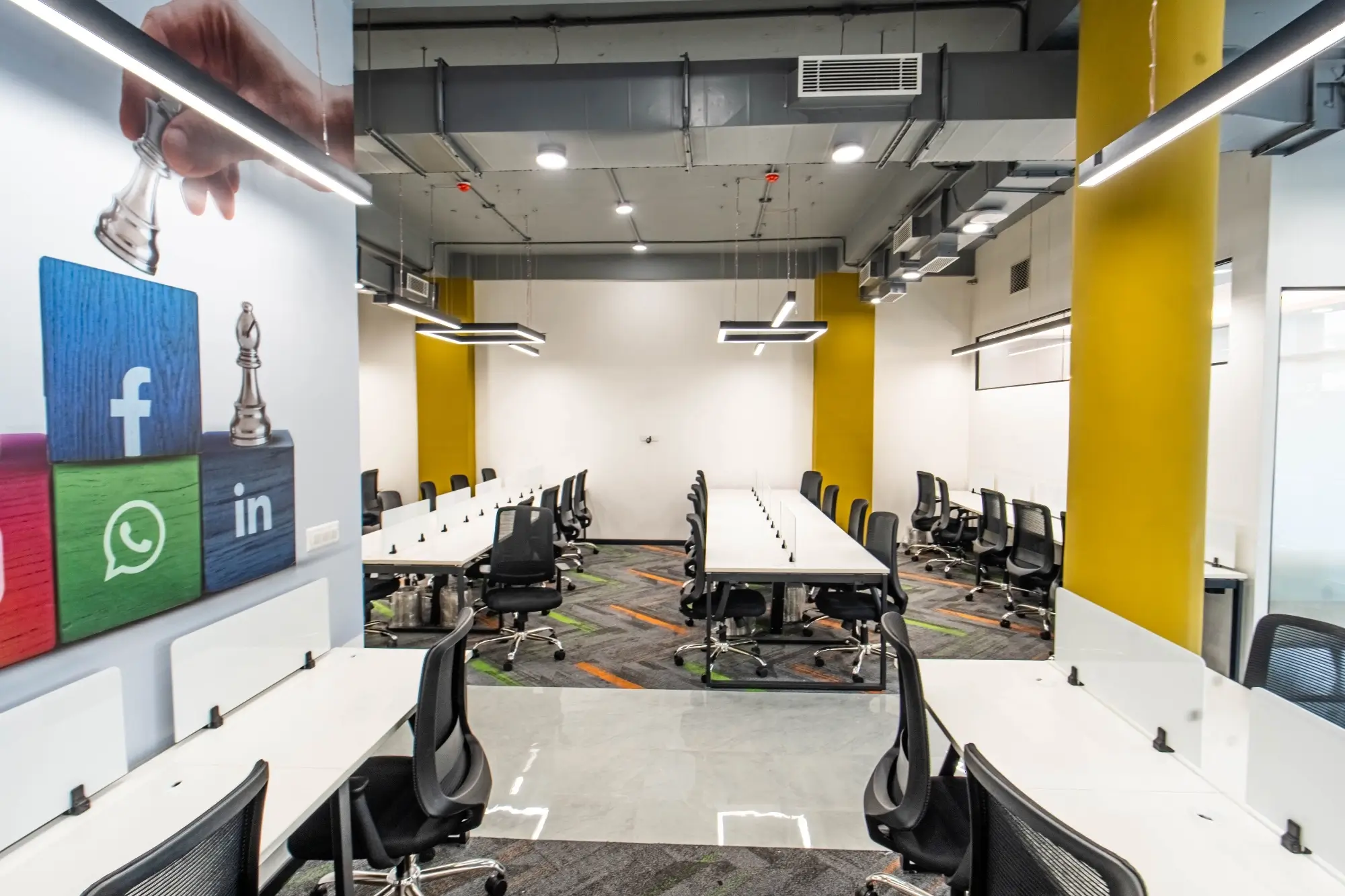
Zoning beats one big open floor
Think in zones, not only rows of tables. This keeps the floor calm even on busy days.
Quiet focus zone
Seat engineering, finance, legal, analytics here. Keep away from reception and café. Use softer finishes and acoustic panels. Add 1–2 person focus rooms and phone booths close by, so quick calls don’t disturb others.
Active collaboration zone
Seat sales, support, marketing, ops here. Give touchdown tables, whiteboards, and short huddle points. Line phone booths along this spine. Noise belongs here, not everywhere.
Project rooms
Keep 2–4 rooms teams can “own” for few weeks. Pin-up walls, big screen, space for prototypes. When work stays up, people don’t roam and disturb the floor.
Café and social
People work from café more than we admit. Give good light, some acoustic control, and movable furniture so it doubles as a townhall. Power points must be handy, otherwise laptops die and productivity also.
Support and storage
IT room, print corners, lockers, housekeeping, and a tidy courier drop. Boring on paper, but without these the office gets messy by month three, pakka. If you want a plain-English planning checklist, many basics are covered in 10 Elements of a Well Designed Office Building.
Meeting room mix that people actually use
Hybrid teams live on video. Big boardrooms look premium but sit empty. True heroes are the small rooms.
For ~100 seats, a working mix is:
- Phone booths: 6–8 units for solo calls
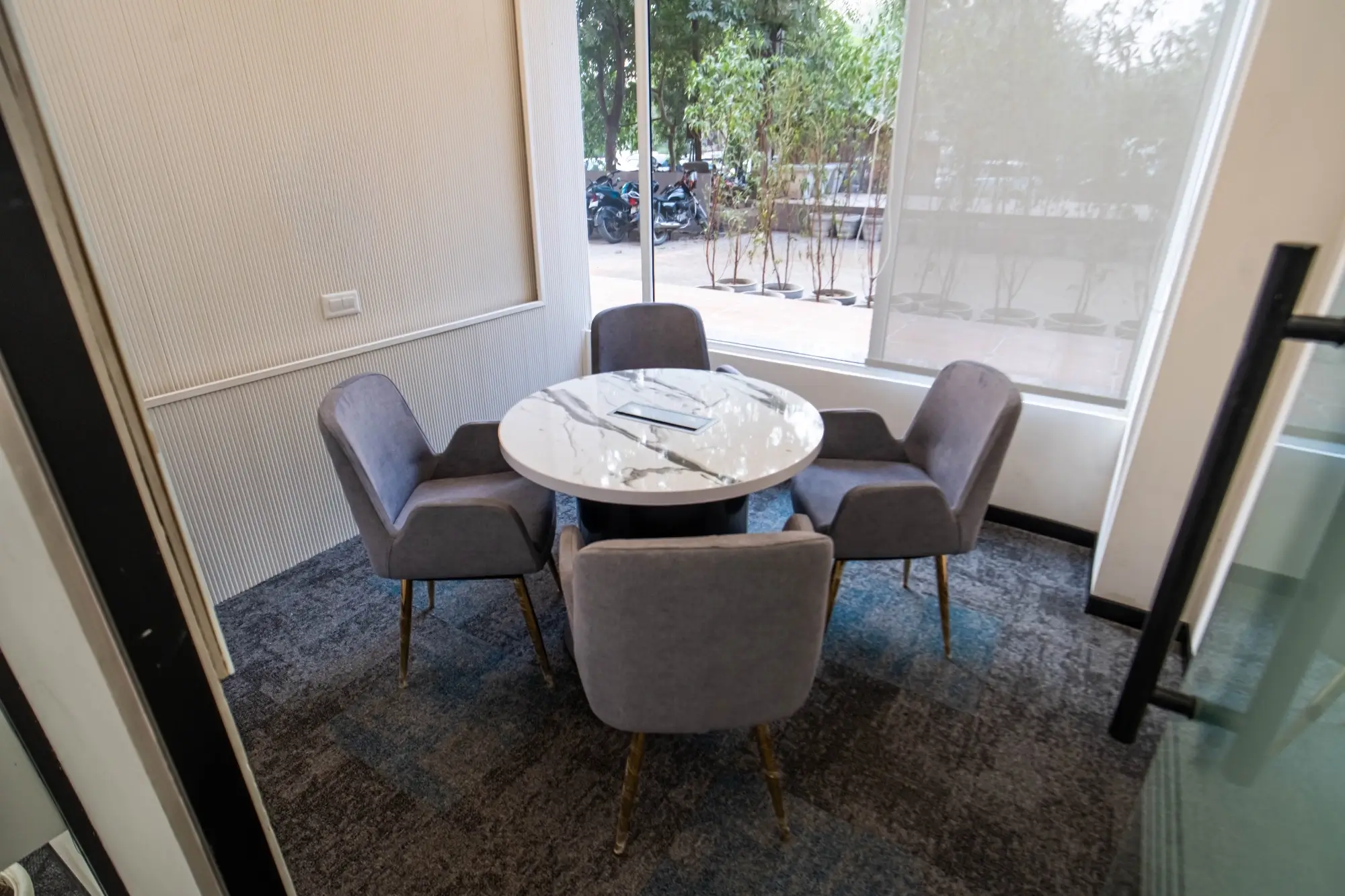
- 2–4 seater rooms: 4–6 rooms for daily work
- 6–8 seater rooms: 2–3 rooms for team reviews
- 10–12 seater: 1 room for board/training/formal demos
- Open huddle points: 2–3 spots with mobile screens
Place tiny rooms near the open office so a 15-minute call doesn’t block the big room. Keep one polished room close to reception for clients.
Acoustics, light, and human comfort
Treat sound and light like infrastructure, not decoration. The WELL Building Standard keeps stressing comfort, light, and sound because these directly impact how people feel and focus.
- Acoustics: Mix glass/gypsum with soft surfaces. Use rated doors and seals where privacy matters. Put booths where noise is high, otherwise people won’t walk far.
- Lighting: Neutral light for work areas, warmer in lounges; avoid glare on screens; add task lights where people read or work on laptops for long.
- Power & data: Floor boxes or grommets at collaboration tables; keep spare adapters in one fixed spot (not with random people). Label cables. Small, but life becomes easy.
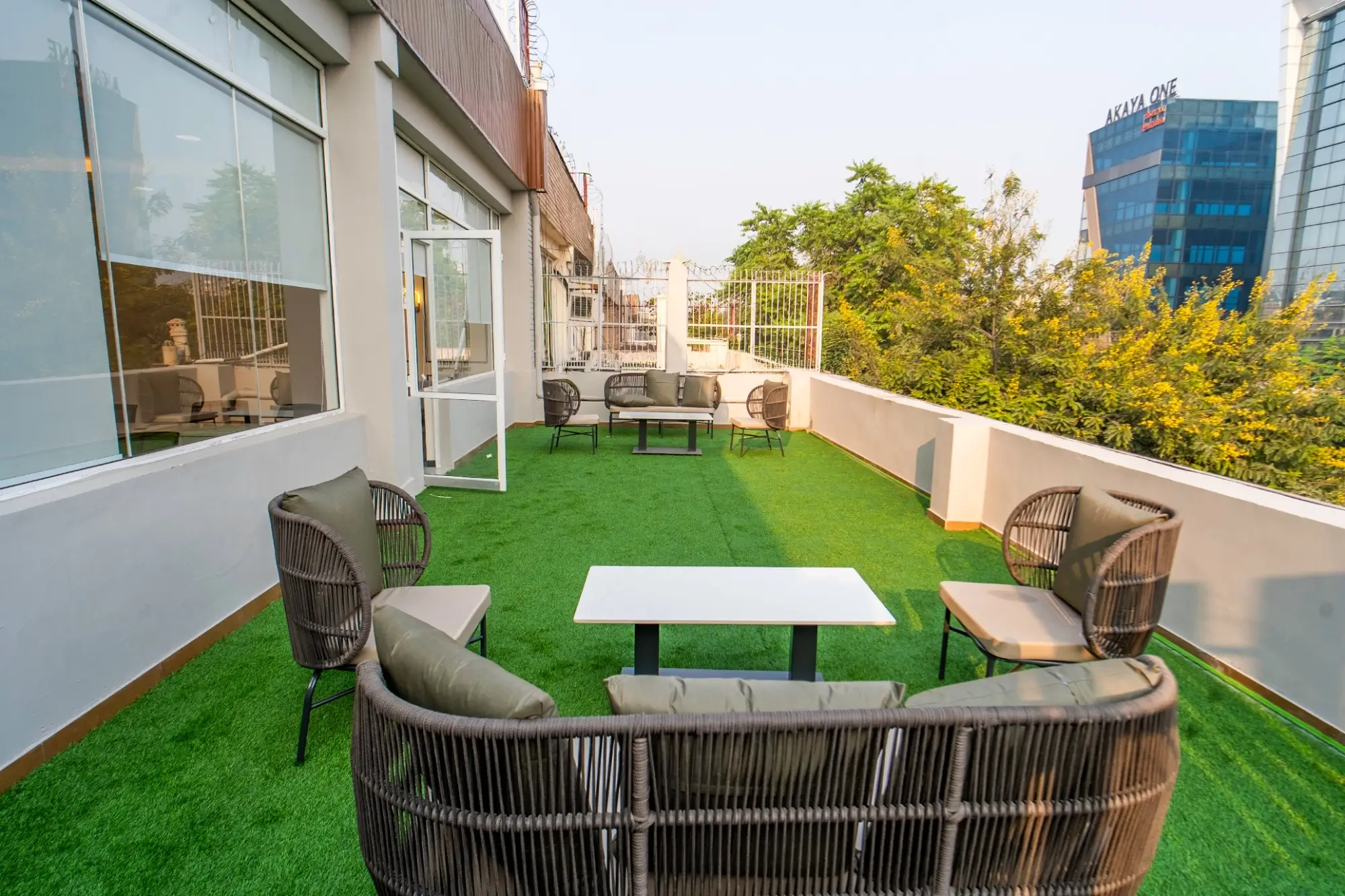
HVAC, fresh air, and life safety
Comfort decides whether people stay full day or leave by lunch. Check tonnage for your design occupancy (not old 100% number). Make meeting rooms, open office, and server areas separately controllable. Keep fresh air on the higher side in long-meeting zones; many tenant-fitout ideas are explained clearly inside IGBC Green Interiors.
Life safety is non-negotiable. Confirm exit routes and widths on the real plan. Coordinate sprinklers with ceilings and partitions. Mark exits so a first-time visitor can find easily. Do one joint review with landlord, fire consultant, and design team before execution; it saves weeks of back-and-forth.
Etiquette and booking rules (keep it short)
Hybrid fails without small rules. Keep them visible and simple:
- Book hot desks a day in advance; release after 30-minute no-show
- Phone booth max 30 minutes; not for long writing sessions
- No speakerphone on open floor (headset only, please)
- Clean-desk policy for shared seats; lockers for personal items
- Project rooms have a start and end date; extend only if free
Run a 10-minute floor tour in move-in week. Show how to book, where to call, where cables kept. Most problems end there only.
Real-world playbooks you can copy-paste
A) 100-person tech scale-up, 3 days in office
- Seat ratio: 0.8
- Rooms: 8 booths, five 2–4, three 6–8, one 10–12
- Zones: Large quiet bay for engineering; active spine for product & design beside two project rooms
- Why it works: Small rooms kill gridlock; quiet bay stays calm even on Tuesday peaks
B) 60-person sales-led, field heavy
- Seat ratio: 0.6
- Rooms: 6 booths, four 2–4, one 6–8, one 8–10 near reception
- Zones: Lively at entry; back half quiet for finance/ops
- Why it works: You don’t pay rent for empty chairs; fast in-out culture supported
C) 180-person BFSI / compliance
- Seat ratio: 0.95–1.0 (more assigned)
- Rooms: 10 booths, six 2–4, four 6–8, two 10–12 for training/audits
- Zones: Clear separation of public, ops, and records
- Why it works: Predictable seating helps process; many small rooms handle constant calls
D) 80-person creative/marketing
- Seat ratio: 0.75
- Rooms: 6 booths, six 2–4, two 6–8, two project rooms with pin-up walls
- Zones: Café doubles as ideation zone; mobile screens and trolleys for quick setups
- Why it works: Short bursts of collab without killing focus areas
If you want to see how these ideas look in built spaces, you can quickly browse our gallery before shortlisting.
Storage, circulation, and everyday order
Give bags a home. Without lockers, chairs become storage. Keep a proper IT cupboard so extra keyboards, routers, and cables don’t float around. Aisles must allow two people to pass without chair bump. Couriers need a tidy landing near reception, not blocking fire exit. Small habits like cable trays and grommets keep the place neat even after month three.
Budget watch-outs (spend where it matters)
Spend where people touch daily: chairs, worktops, task lights, booths, acoustic panels. If you must save, reduce fixed desks little bit, not quality. Keep a small buffer for AV tweaks after go-live; you will fine-tune once real calls start. When you’re ready to discuss scope or costs, just Contact us and we’ll guide step-by-step without jargon.
Measure, adjust, and lock
For first 6–8 weeks post move-in, measure lightly:
- Seat occupancy by zone on base and peak days
- Room utilisation by size
- Calls spilling into open areas vs booths
- Quick two-question pulse on comfort/noise
Make one round of changes. Add booths before building new walls. If one big room is always empty, split into two small. Hybrid office is a living thing, not set in stone.